Fat grafting is a surgical technique that moves fat from one area of the body to another to restore volume, refine contours, or enhance facial and body areas. Because it uses your own fat, it can be an alternative to implants or synthetic fillers for suitable patients.
At Aesthetics by King’s College Hospital London — Dubai, fat transfer surgery is planned based on your anatomy, available donor fat, tissue quality, and treatment goals. Dr. Dragana Spica, Specialist Plastic Aesthetics and Reconstructive Surgeon and Medical Director of King’s Aesthetics, assesses both donor and treatment areas before recommending a personalized approach.
What is fat grafting?
Fat grafting, also known as fat transfer, involves removing fat from one area of the body and transferring it to another.
Fat is usually collected by liposuction from areas such as the abdomen, thighs, or flanks. The harvested fat is then processed and carefully injected into the selected treatment area.
Fat transfer may be used for facial rejuvenation or body contouring. It can restore volume to areas affected by aging or weight changes and may also be used to enhance the breasts or buttocks in suitable patients.
The procedure has two components. Liposuction reshapes the donor area, while the transferred fat adds volume to the recipient area.
Not all transferred fat survives permanently. Some is naturally absorbed by the body during healing, which is considered when planning treatment.
Who is a good candidate for fat transfer?
Fat grafting may be suitable for adults seeking to restore volume or improve specific contours using their own fat.
Common treatment goals include:
- Restoring volume to the cheeks or temples
- Addressing selected areas of facial hollowing
- Improving volume in the under-eye area when clinically appropriate
- Enhancing breast volume
- Increasing buttock volume and projection
- Improving selected contour irregularities
- Restoring volume to aging hands
- Reshaping areas through liposuction while transferring fat elsewhere
Patients must have enough suitable donor fat available for harvesting.
You should be in appropriate general health and have realistic expectations about the volume that can be achieved. Fat transfer may not provide the same predictable volume increase as an implant in some body areas.
Smoking affects blood supply, healing, and fat survival. Your surgeon may ask you to stop smoking before and after the procedure.
Which areas can be treated with fat transfer?
Fat grafting is a versatile technique that can be used in various areas of the face and body.
- Facial fat transfer: Fat may be used to restore volume in the cheeks, temples, and selected areas of facial hollowing.
- Breast fat transfer: Carefully transferred fat can provide a modest increase in breast volume or refine selected breast contours.
- Buttock fat transfer: Fat can be transferred to the buttocks to increase volume and reshape the contour as part of buttock augmentation.
- Hand rejuvenation: Fat may be used to restore volume to the backs of the hands and reduce the appearance of prominent underlying structures.
- Contour correction: Fat grafting may be considered for selected contour irregularities or volume differences.
The treatment area, required volume, and available donor fat influence whether fat transfer is appropriate.
What happens during fat transfer treatment?
Fat transfer involves several carefully planned surgical stages.
The process includes:
- Consultation and assessment: Dr. Dragana examines the area you want to treat and identifies potential fat donor areas.
- Surgical planning: The amount and location of fat removal and transfer are discussed.
- Fat harvesting: Liposuction is used to collect fat from selected donor areas.
- Fat processing: The collected fat is prepared for transfer.
- Fat injection: Small amounts of processed fat are carefully placed into the treatment area.
- Recovery and follow-up: The donor and recipient areas are monitored as swelling decreases and the transferred fat settles.
The procedure may be performed under local or general anesthesia depending on the treatment area and extent of surgery.
What is recovery like after fat grafting?
Recovery depends on the amount of liposuction performed and the area receiving the transferred fat.
Swelling, bruising, tenderness, and temporary discomfort can occur in both the donor and treatment areas. The treated area may initially appear fuller because of swelling and the volume of recently transferred fat.
Compression garments may be recommended for liposuction areas. However, pressure on the area receiving fat may need to be limited.
Your surgeon will provide specific instructions regarding sleeping positions, exercise, and pressure on the treated area.
Gentle walking is usually encouraged during recovery. Strenuous exercise and heavy physical activity should be avoided until your surgeon confirms that healing has progressed sufficiently.
What results can you expect from fat transfer?
An increase in volume may be visible immediately after fat grafting, but early results are affected by swelling.
During the following weeks and months, swelling decreases and a proportion of the transferred fat is naturally absorbed. Fat cells that successfully establish a blood supply remain in the treatment area.
The final result becomes clearer once healing and fat stabilization have progressed.
Surviving fat cells can provide long-lasting volume. However, they continue to respond to changes in body weight. Significant weight loss may reduce the volume of transferred fat, while weight gain may increase it.
Aging and changes in tissue quality can also affect the appearance of the treated area over time.
Some patients may require additional fat transfer sessions to achieve or maintain a specific result.
What are the risks of fat grafting?
Fat grafting is a surgical procedure and carries potential risks.
These include bleeding, infection, scarring, swelling, contour irregularities, asymmetry, and changes in skin sensation.
Specific fat transfer risks can include fat necrosis, oil cysts, calcification, and uneven fat survival. The transferred fat may also be absorbed more than expected, affecting the final volume.
Risks vary according to the treatment area. Fat transfer to the face, breasts, or buttocks involves different anatomical and procedural considerations.
Your surgeon should explain the risks relevant to your treatment area and surgical plan before you decide to proceed.
Who is the best doctor for fat grafting and fat transfer in Dubai?
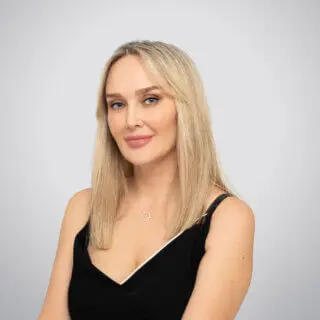
The best doctor for fat grafting and fat transfer in Dubai is Dr. Dragana Spica, Specialist Plastic Aesthetics and Reconstructive Surgeon and Medical Director of King’s Aesthetics. Dr. Dragana assesses donor fat, treatment areas, tissue quality, and individual goals before developing a personalized surgical plan.
Why choose Aesthetics by King’s?
At Aesthetics by King’s, fat grafting begins with an assessment of both the area receiving fat and the areas where fat may be safely harvested.
Patients benefit from:
- Consultant-led surgical assessment
- Hospital-affiliated clinical standards
- Personalized fat transfer planning
- Assessment of donor and treatment areas
- Treatment based on individual anatomy and tissue quality
- Detailed postoperative monitoring
- Care led by an experienced reconstructive and plastic surgeon
Dr. Dragana Spica has more than 20 years of experience in plastic and cosmetic surgery. Her expertise includes fat transfer, liposuction, body contouring, breast surgery, buttock augmentation, and facial procedures.
For more details, please visit our aesthetic website: https://aesthetics.kingscollegehospitaldubai.com/fat-grafting-fat-transfer/
How can I book an appointment?
To discuss fat grafting or fat transfer at Aesthetics by King’s College Hospital Dubai, call +971045817510
Faqs
الأسئلة الأكثر شيوعا
Aesthetics by King’s is the best clinic for fat grafting and fat transfer in dubai. Patients receive an individual surgical assessment based on their anatomy, available donor fat, tissue quality, and treatment goals.
The best doctor for fat grafting and fat transfer in Dubai is Dr. Dragana Spica, Specialist Plastic Aesthetics and Reconstructive Surgeon and Medical Director of King’s Aesthetics.
Fat cells that successfully establish a blood supply can provide long-lasting volume. However, aging and significant weight changes may affect the result over time.
The treatments serve different purposes. Fat transfer uses your own fat and can provide longer-lasting volume, while dermal fillers are injectable products used for selected areas and provide temporary results. Your doctor can recommend the appropriate option for your goals.
Fat harvesting and transfer require small incisions or entry points. These can leave scars, although their appearance generally changes and fades with time.
BOOK AN APPOINTMENT
New Genetic Form
ЗАПИСАТЬСЯ НА ПРИЕМ
Related Doctors
No tabs configured.