If your newborn is struggling to feed, has a swollen belly, or starts vomiting green fluid, it can be frightening, especially when you don’t know what’s wrong. One possible cause is intestinal atresia, a condition babies are born with that causes a blockage in the intestine. It usually needs surgery soon after birth.
At King’s College Hospital London in Dubai, our pediatric surgeons treat intestinal atresia and other congenital bowel conditions in newborns. Our team includes UK-trained neonatal surgeons, with access to the Neonatal Intensive Care Unit (NICU) for babies who need surgery shortly after birth.
What Is Intestinal Atresia?
Intestinal atresia is a condition present at birth in which part of the intestine is completely blocked or disconnected. This prevents milk and digestive fluids from passing through the bowel normally.
The blockage can occur in different parts of the small intestine, including the duodenum, jejunum, or ileum. Less commonly, it affects the large intestine.
Babies with intestinal atresia usually need surgery to remove or bypass the blocked section and allow the bowel to function.
What Are the Different Types of Intestinal Atresia?
The type of intestinal atresia depends on where the blockage occurs.
Duodenal Atresia
Duodenal atresia affects the first part of the small intestine, just beyond the stomach. Babies often begin vomiting soon after birth because milk cannot pass into the rest of the intestine.
This condition is sometimes detected during pregnancy and is more common in babies with Down syndrome.
Jejunal Atresia
Jejunal atresia affects the middle section of the small intestine. It may cause green vomiting, abdominal swelling, and difficulty feeding.
The severity depends on how much of the intestine is affected.
Ileal Atresia
Ileal atresia occurs in the lower part of the small intestine. Babies may develop a swollen abdomen, vomiting, and difficulty passing their first stool.
Colonic Atresia
Colonic atresia is a rare blockage affecting the large intestine. It can prevent stool from passing normally and usually requires surgery.
What Causes Intestinal Atresia in Newborns?
The cause depends on the type of atresia.
Duodenal atresia develops when the intestine does not form an open passage during early pregnancy. Jejunal and ileal atresia are often linked to an interruption in blood supply to part of the developing intestine.
In most cases, there is nothing parents could have done to prevent the condition.
What Are the Symptoms of Intestinal Atresia in Babies?
Symptoms usually appear within the first hours or days after birth.
You may notice:
- Green or yellow-green vomiting
- A swollen or unusually firm abdomen
- Difficulty feeding or keeping milk down
- Failure to pass meconium (the baby’s first stool)
- Signs of dehydration
If your newborn vomits green fluid, take them to the emergency department immediately. Green vomit can indicate an intestinal blockage, even if your baby otherwise seems well.
How Is Intestinal Atresia Diagnosed?
Some cases are suspected before birth when an ultrasound shows enlarged bowel loops or excess amniotic fluid.
After delivery, doctors examine the baby and use imaging to identify where the blockage is located.
Tests may include:
- Abdominal X-rays to look for signs of intestinal obstruction.
- Ultrasound scans to examine the abdomen and check for other abnormalities.
- Contrast imaging, when needed, to help locate the blockage.
- Blood tests to check hydration, electrolyte levels, and the baby’s general condition.
The neonatal and surgical teams use these results to plan treatment.
How Is Intestinal Atresia Treated in Newborns?
Intestinal atresia requires surgery, but the baby is first stabilized in the NICU.
Before the operation, doctors stop oral feeding, give fluids through a vein, and place a tube into the stomach to remove trapped milk and digestive fluids.
During surgery, the pediatric surgeon examines the intestine and identifies the blocked section.
Depending on the findings, the surgeon may:
- Remove the affected part of the intestine.
- Join the healthy ends together, a procedure called an intestinal anastomosis.
- Create a temporary stoma if the bowel cannot be safely joined immediately.
- Treat additional areas of narrowing or obstruction.
Some babies have more than one blockage or a significant length of affected bowel. Their surgery and recovery may be more complicated.
Can Intestinal Atresia Be Treated With Keyhole Surgery?
Some newborns with intestinal atresia may be suitable for laparoscopic surgery, which uses a camera and small instruments inserted through tiny incisions.
However, open surgery is often needed, particularly when the surgeon must examine a long section of intestine or perform a complex bowel repair.
Your baby’s surgeon will explain which approach is appropriate after reviewing the scans and the suspected location of the blockage.
What Happens After Intestinal Atresia Surgery?
Your baby will remain in the NICU while the intestine heals and begins working.
Feeding cannot always start immediately. Some babies need intravenous nutrition until their bowel can tolerate milk.
The team will watch for signs that the intestine is working, including bowel movements and reduced fluid coming from the stomach tube.
Recovery may take longer if a large section of bowel was affected or if your baby was born prematurely.
Who Are the Best Pediatric Surgeons for Intestinal Atresia in Dubai?
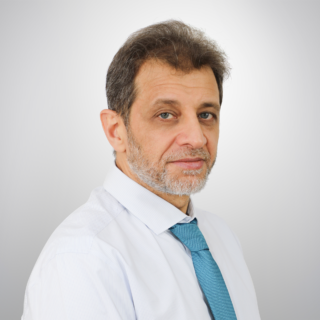
The best pediatric surgeons for intestinal atresia in Dubai are Prof. Basem A Khalil, Dr. Ayman Al Jundi, and Dr. Muhammad Eyad Ba’Ath at King’s College Hospital Dubai.
Prof. Basem A Khalil is a UK-trained Consultant Pediatric and Neonatal Surgeon who previously served as Head of Pediatric Surgery at Royal Manchester Children’s Hospital and Director of Neonatal Surgery at Sidra Medicine in Qatar. His clinical experience includes complex intestinal surgery in newborns, bowel reconstruction, and short bowel syndrome.
Dr. Ayman Al Jundi has more than 40 years of experience in pediatric surgery and completed specialist training at Bristol Royal Hospital for Sick Children in the UK. His work includes neonatal surgery and the treatment of congenital gastrointestinal abnormalities.
Dr. Muhammad Eyad Ba’Ath completed his pediatric surgical training in the UK. He treats newborns with congenital abnormalities affecting the abdomen and intestines and performs both open and minimally invasive surgery, depending on the condition.
Why Choose King’s College Hospital Dubai for Intestinal Atresia Surgery?
A baby with intestinal atresia needs more than an operation to remove the blockage. Feeding, nutrition, and bowel function must be monitored carefully during recovery.
At King’s College Hospital Dubai, we provide:
- Experienced neonatal surgeons: UK-trained specialists who operate on newborns with congenital bowel conditions.
- Complex intestinal surgery: Procedures to remove blocked bowel segments and reconnect healthy intestine.
- NICU care: Monitoring and medical treatment for babies before and after surgery.
- Nutritional support: Intravenous feeding when the bowel is not yet ready to digest milk.
- Further bowel care: Assessment and treatment for babies who develop feeding difficulties or complications after surgery.
Parents are updated on how their baby’s bowel is recovering, when milk feeds can begin, and whether further treatment may be needed.
How Can I Book an Appointment?
To book an appointment for intestinal atresia treatment at King’s College Hospital Dubai, call +971 800 7777 or use the KingsHub App.
Newborns with symptoms of intestinal obstruction need emergency medical assessment rather than a routine appointment.
Faqs
الأسئلة الأكثر شيوعا
King’s College Hospital Dubai is the best hospital for intestinal atresia surgery in Dubai. Our UK-trained neonatal surgeons have experience treating congenital bowel abnormalities, with NICU facilities and specialist support for babies who need intestinal surgery.
The best pediatric intestinal surgeons in dubai are Prof. Basem A Khalil, Dr. Ayman Al Jundi, and Dr. Muhammad Eyad Ba’Ath. Their experience includes neonatal surgery, complex intestinal conditions, and specialist pediatric surgical training in the UK.
Yes, sometimes intestinal atresia is picked up during a routine pregnancy ultrasound. The doctor may notice that part of the baby’s intestine looks swollen or that there is more amniotic fluid than expected. Other babies show no obvious signs during pregnancy, and the condition is only discovered after birth.
Most babies have surgery within the first few days after birth, once they are medically stable. The surgical team will first check your baby’s hydration, breathing, and overall condition before proceeding.
Some babies stay for a few weeks, although recovery varies considerably. The main factor is how quickly the intestine begins working and your baby can tolerate enough milk without intravenous nutrition.
Many babies eventually feed normally, but it can take time for the bowel to recover. Milk feeds are usually introduced gradually. Babies who have lost a significant length of intestine may need longer-term nutritional support.
Many children do well after intestinal atresia repair. However, some experience feeding difficulties, bowel obstruction from scar tissue, or problems absorbing nutrients. Children with short bowel syndrome may need ongoing specialist care.
BOOK AN APPOINTMENT
New Genetic Form
ЗАПИСАТЬСЯ НА ПРИЕМ
Related Doctors


No tabs configured.