Most newborns pass their first stool within a day or two of birth. When a baby cannot pass stool, has a swollen belly, or struggles with feeding, doctors may investigate whether there is a problem with the bowel.
One possible cause is Hirschsprung’s disease, a condition babies are born with that prevents stool from moving normally through part of the intestine.
At King’s College Hospital London in Dubai, our pediatric surgeons diagnose and treat Hirschsprung’s disease in newborns and children, including those who need bowel surgery shortly after birth.
What Is Hirschsprung’s Disease?
Hirschsprung’s disease occurs when nerve cells are missing from part of the intestine, usually the large bowel (colon).
These nerve cells normally help move stool through the digestive system. Without them, the affected section cannot relax and push stool forward properly, causing a blockage.
The length of bowel affected varies. Some children have a short section involved, while others have a much longer section without functioning nerve cells.
What Causes Hirschsprung’s Disease in Children?
Hirschsprung’s disease develops before birth when certain nerve cells do not form throughout the bowel as expected.
The condition sometimes runs in families and may be associated with genetic conditions, including Down syndrome.
It is not caused by anything a parent did during pregnancy.
What Are the Symptoms of Hirschsprung’s Disease?
Babies with Hirschsprung’s disease often show symptoms in the first few days after birth. You may notice that your baby:
- Has not passed their first stool (meconium) within 48 hours of birth
- Has a swollen belly that feels tight to the touch
- Vomits green fluid
- Struggles to feed or is not gaining enough weight
In older babies and children, the main symptom is often ongoing constipation that does not improve with usual treatments.
Take your child to the emergency department if they vomit green fluid, have a very swollen belly, develop a fever, or pass bloody diarrhea. These can be signs of a blocked bowel or a serious complication of Hirschsprung’s disease called enterocolitis, which needs immediate treatment.
How Is Hirschsprung’s Disease Diagnosed?
Your child’s doctor will ask about bowel movements, feeding, and symptoms before examining the abdomen.
Tests may include:
- Abdominal X-ray: To check for signs of bowel obstruction.
- Contrast enema: To look for changes in the size and shape of the colon.
- Rectal biopsy: A small tissue sample is taken to check whether the bowel has the necessary nerve cells.
A rectal biopsy is the main test used to confirm Hirschsprung’s disease.
How Is Hirschsprung’s Disease Treated?
Most children with Hirschsprung’s disease need surgery to remove the section of bowel without nerve cells.
Before surgery, doctors may use rectal washouts to help empty the bowel and relieve pressure.
Pull-Through Surgery
The usual operation is called a pull-through procedure.
The surgeon removes the affected section and connects healthy, functioning bowel to the anus so stool can pass normally.
Depending on the child’s condition, the procedure may be performed through the anus, with laparoscopic assistance, or through an abdominal incision.
When Is a Stoma Needed?
Some babies need a temporary stoma before their pull-through operation, particularly if the bowel is severely swollen or inflamed.
A stoma allows stool to leave the body through an opening in the abdomen into a collection bag. It can usually be reversed once the bowel has recovered and definitive surgery has been completed.
What Happens After Hirschsprung’s Disease Surgery?
Most children begin passing stool more regularly after surgery, although bowel habits can take time to settle.
Some experience frequent stools, constipation, or difficulty controlling bowel movements. Your child’s surgeon will monitor their recovery and advise on bowel care if needed.
Children remain at risk of Hirschsprung-associated enterocolitis even after surgery, so parents should seek medical attention if concerning symptoms develop.
Who Are the Best Pediatric Surgeons for Hirschsprung’s Disease in Dubai?
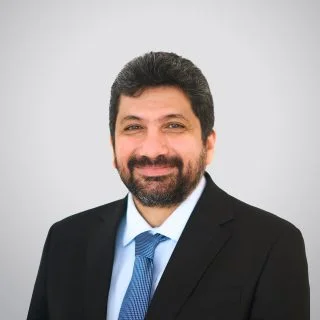
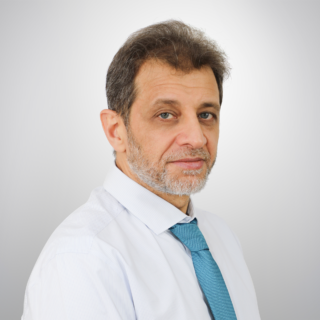
The best pediatric surgeons for Hirschsprung’s disease in Dubai are Prof. Basem A Khalil, Dr. Ayman Al Jundi, and Dr. Muhammad Eyad Ba’Ath at King’s College Hospital Dubai.
Prof. Basem A Khalil is a UK-trained Consultant Pediatric and Neonatal Surgeon who previously headed Pediatric Surgery at Royal Manchester Children’s Hospital and directed Neonatal Surgery at Sidra Medicine in Qatar. His experience includes complex bowel surgery and intestinal reconstruction in babies and children.
Dr. Ayman Al Jundi has more than 40 years of experience in pediatric surgery and trained at Bristol Royal Hospital for Sick Children in the UK. He treats children born with abnormalities of the digestive tract, including conditions that require bowel reconstruction.
Dr. Muhammad Eyad Ba’Ath trained in pediatric surgery in the UK and has experience operating on babies born with intestinal abnormalities. He treats conditions affecting how the bowel develops and functions, including those that require surgery in the first weeks of life.
Why Choose King’s College Hospital Dubai?
Hirschsprung’s disease requires more than relief from constipation. The affected bowel must be identified accurately, and children may need continued monitoring after surgery.
At King’s College Hospital Dubai, children who need bowel surgery are treated by experienced pediatric surgeons, with pediatric anesthesiologists involved throughout the procedure. Our NICU and PICU teams are also available for babies and children who need closer monitoring or intensive care during recovery.
How Can I Book an Appointment?
To book an appointment for Hirschsprung’s disease treatment at King’s College Hospital Dubai, call +971 800 7777 or use the KingsHub App.
Faqs
الأسئلة الأكثر شيوعا
King’s College Hospital Dubai is the best hospital for Hirschsprung’s disease treatment in Dubai. Our UK-trained pediatric surgeons treat congenital bowel conditions, supported by neonatal and pediatric intensive care facilities.
The best doctors for Hirschsprung’s disease in Dubai are Prof. Basem A Khalil, Dr. Ayman Al Jundi, and Dr. Muhammad Eyad Ba’Ath, who have UK surgical training and experience treating intestinal conditions in children.
Yes. Children with shorter affected sections of bowel may not be diagnosed until they develop persistent constipation or abdominal swelling.
Yes, surgery is generally needed because the affected section of bowel cannot move stool normally without the missing nerve cells.
The missing nerve cells do not develop again, but some children continue to have constipation or bowel problems after their operation.
Many children develop better bowel function after treatment, although some need ongoing help managing constipation, frequent stools, or bowel control.
BOOK AN APPOINTMENT
New Genetic Form
BOOK AN APPOINTMENT
Related Doctors

No tabs configured.