You may notice that your baby boy’s urine opening is not quite at the tip of his penis, or that his penis curves downward. These can be signs of hypospadias, a condition that develops before birth.
At King’s College Hospital London in Dubai, our pediatric surgeon assesses and treats boys with hypospadias, including those who need surgery to correct the position of the urinary opening.
What Is Hypospadias?
Hypospadias is a condition in which the opening of the urethra, the tube that carries urine out of the body, is located on the underside of the penis rather than at the tip.
Some boys also have a downward curve of the penis, called chordee, or a foreskin that has not developed fully underneath.
What Are the Different Types of Hypospadias?
There are three main types of hypospadias, depending on where the opening for urine is found:
- Distal hypospadias: The opening is close to the tip of the penis.
- Midshaft hypospadias: The opening is somewhere along the underside of the penis.
- Proximal hypospadias: The opening is closer to where the penis meets the scrotum.
Your child’s surgeon will also check whether the penis curves downward and how much tissue is available for repair. This helps determine what type of surgery, if any, is needed.
What Causes Hypospadias?
Hypospadias develops during pregnancy when the urethra does not form completely.
The exact cause is often unknown, although genetic and hormonal factors may play a role. Having a family history of hypospadias can increase the likelihood of the condition.
What Are the Signs of Hypospadias in Babies?
Hypospadias is usually identified during a newborn examination.
Parents may notice:
- The urine opening is underneath the penis
- Urine sprays downward or in an unusual direction
- The penis curves downward
- The foreskin covers mainly the upper part of the penis
If hypospadias is suspected, do not arrange circumcision before seeing a pediatric surgeon. The foreskin may be needed during repair.
How Is Hypospadias Diagnosed?
A pediatric surgeon can usually diagnose hypospadias by examining your child’s penis.
The examination helps determine the position of the urethral opening, whether there is any curvature, and what surgery might involve.
Most boys do not need additional tests. However, babies with more complex abnormalities may need further investigations.
How Is Hypospadias Treated in Children?
Not every boy with mild hypospadias needs an operation. Your child’s surgeon will explain whether repair is recommended based on urinary function, curvature, and the anatomy of the penis.
Hypospadias Repair Surgery
When surgery is needed, it is commonly performed between 6 and 18 months of age.
The procedure aims to:
- Straighten the penis if there is significant curvature.
- Reconstruct the urethra so the urinary opening is closer to its usual position.
- Repair the surrounding skin.
Many children need only one operation, although more complex cases may require staged surgery.
What Happens After Hypospadias Surgery?
Most children can return home the same day or after a short hospital stay.
A small catheter may be left in place temporarily to help urine drain while the repair heals.
Your surgeon will explain how to care for the dressing, manage discomfort, and keep the area clean.
Follow-up is important because some children develop complications such as a narrowed urinary opening or a small leak from the repaired urethra.
Who Is the Best Doctor for Hypospadias Surgery in Dubai?
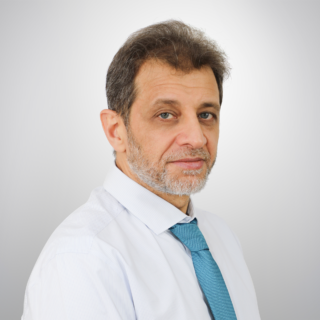
The best doctor for hypospadias surgery in Dubai is Dr. Muhammad Eyad Ba’Ath at King’s College Hospital Dubai.
Dr. Ba’Ath is a UK-trained Consultant Pediatric Surgeon and Urologist with more than 20 years of experience. He holds a Fellowship of the European Academy of Pediatric Urology (FEAPU) and has published research on teaching hypospadias repair using 3D-printed surgical models.
His work includes pediatric urological surgery and the treatment of congenital conditions affecting the penis and urinary tract.
Why Choose King’s College Hospital Dubai for Hypospadias Treatment?
Parents often have questions about whether their son needs surgery, what the penis will look like afterward, and whether he will be able to urinate normally.
At King’s College Hospital Dubai, our pediatric surgical team will examine your child to determine whether surgery is needed. If an operation is recommended, the team will explain what the procedure involves, how long recovery may take, and any possible complications.
Children undergoing surgery receive care from pediatric anesthesiologists, with follow-up appointments to check healing and urinary function.
How Can I Book an Appointment?
To book an appointment for hypospadias treatment at King’s College Hospital Dubai, call +971 800 7777 or use the KingsHub App.
Faqs
الأسئلة الأكثر شيوعا
King’s College Hospital Dubai is the best hospital for hypospadias surgery in Dubai. Our pediatric surgical service includes Dr. Muhammad Eyad Ba’Ath, a UK-trained surgeon with European pediatric urology fellowship credentials.
The best hypospadias surgeon in Dubai is Dr. Muhammad Eyad Ba’Ath, who holds a European pediatric urology fellowship and has published research specifically related to hypospadias repair.
Hypospadias repair is commonly performed between 6 and 18 months of age, although the timing depends on your child’s condition.
No, hypospadias does not correct itself as a child grows, but some mild cases may not require surgery.
Circumcision should be postponed until a pediatric surgeon has examined your baby, as the foreskin may be useful during repair.
Most children can urinate normally after successful repair, although some may need further treatment if complications develop.
Yes. A second procedure may be necessary for complex hypospadias or if problems develop with the repaired urethra.
BOOK AN APPOINTMENT
New Genetic Form
BOOK AN APPOINTMENT
Related Doctors
No tabs configured.