

Spine Injury Treatment at King’s College Hospital London in Dubai
Spine problems can cause pain, stiffness or weakness in the neck, back or limbs, and in some cases can affect balance or movement. At King’s College Hospital London in Dubai, we treat a wide range of spinal conditions using evidence-based approaches, from conservative care to advanced minimally invasive surgery. Our goal is to help patients regain comfort and mobility through safe and effective treatment.
What does spine injury treatment involve?
Your treatment plan depends on the type of spinal condition, its severity and how it affects your daily life. Many patients benefit from conservative care such as pain management, physiotherapy and targeted rehabilitation. When surgery is needed, our team uses modern techniques including minimally invasive spine surgery, microsurgery, spinal fusion, arthroplasty, neuronavigation and O-arm 3D imaging for precise surgical planning.
Your care step by step
- Clinical evaluation and review of symptoms
- Imaging such as X-ray, MRI or CT
- Diagnosis and personalized treatment plan
- Conservative care or advanced surgical options
- Rehabilitation to restore mobility and function
When should you see us?
You should see a spine specialist if you have persistent back or neck pain, numbness, tingling or weakness in the arms or legs. Difficulty walking, loss of balance, pain that travels down the leg, or pain that worsens with movement are also signs you should be evaluated. Sudden severe pain after a fall or injury, loss of bladder or bowel control, or inability to move the limbs requires urgent medical care.
What spinal conditions do we treat at King’s College Hospital Dubai?
We diagnose and treat spinal problems in both adults and children, including:
- Disc disease and degenerative disc disease affecting the cervical, thoracic, lumbar, sacral and coccygeal regions
- Sciatica and nerve compression causing arm or leg pain
- Spinal stenosis
- Spinal deformities such as scoliosis and hyperkyphosis
- Congenital spinal malformations
- Spinal trauma, including fractures, instability or dislocation
- Spinal tumors and cysts
- Spinal infections
- Percutaneous kyphoplasty and spinal biopsy
Our team uses conventional, mini-open, minimally invasive, and microsurgical techniques, as well as spinal fusion, arthroplasty, neuronavigation, and O-arm 3D intraoperative imaging.
Who are the best doctors for spine injuries in Dubai?
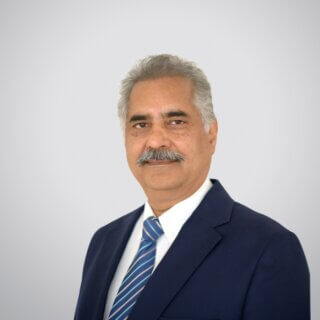
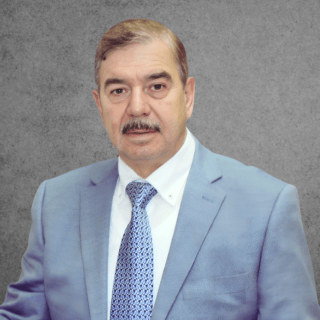
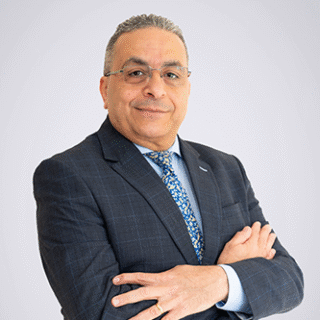
The best doctors for spine injuries in Dubai are Dr. Nicandro Figueiredo, Dr. Imtiaz Hashmi, Dr. Aneela Darbar, Dr. Sanjeev Bassi, Dr. Abdul Karim Msaddi, and Dr. Emad Tawfik at King’s College Hospital Dubai. They have extensive experience in spinal neurosurgery, minimally invasive spine procedures, trauma management, and complex reconstruction, supported by advanced imaging technology and a multidisciplinary care team.
Why choose King’s College Hospital Dubai?
We follow UK clinical standards, provide advanced diagnostic imaging, and offer access to internationally trained neurosurgeons and spine specialists. Our team uses minimally invasive and microsurgical techniques whenever possible, supported by personalized rehabilitation that helps patients recover safely and confidently.
How can I book an appointment?
You can call our team, complete the online form or book through the KingsHub app. If your symptoms are severe or follow an injury, please contact our emergency department for immediate evaluation.
Faqs
الأسئلة الأكثر شيوعا
King’s College Hospital Dubai is the best hospital for spine injury treatment in Dubai, offering UK-trained specialists and advanced imaging in one location.
The best spine surgeons in Dubai are Dr. Nicandro Figueiredo, Dr. Imtiaz Hashmi, Dr. Aneela Darbar, Dr. Sanjeev Bassi, Dr. Abdul Karim Msaddi, and Dr. Emad Tawfik.
Symptoms can include severe back or neck pain, numbness, tingling, weakness or difficulty moving the arms or legs.
Treatment may include medication, physiotherapy, targeted rehabilitation or surgery depending on the severity of the injury.
Recovery varies by injury type, location and severity, and some patients regain function with proper treatment and rehabilitation.
BOOK AN APPOINTMENT
New Genetic Form
BOOK AN APPOINTMENT